
The social implications of the study initially focus on generating and testing a model for technology acceptance. Thanks to the participants in the field tests, it has already been possible to collect data using questionnaires. The academic survey was conducted with 9th and 11th grade students at DBBC and with two 11th grade students at FEBB as part of the “Schülerkarriere” career assistant pilot. The next step for 2024 is to create a technology acceptance model and a technology impact assessment.
The second main objective of the study is the acceptance of services such as the career assistant or other MERLOT services. The key question is: Are users willing to use the career assistant or other MERLOT services? This is influenced by various factors, including motives for use and trust in the service, which emerge from the tests.
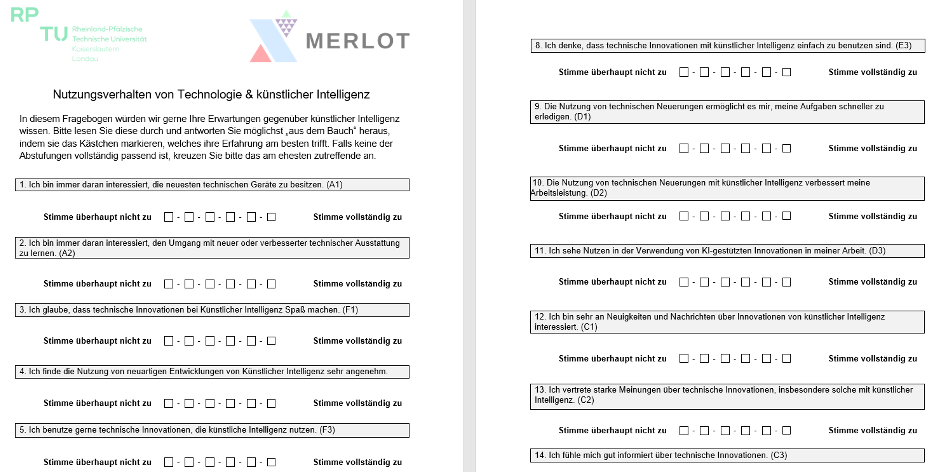
The results of the field tests showed that technology acceptance between the different school types was higher in Realschulen than in Gymnasien or Fachoberschulen, although no differences were found between Gymnasien and Fachoberschulen. There was no difference in technology acceptance between the different year groups. In terms of gender, the male study participants were found to have a significantly higher general acceptance of technology compared to females and diverse individuals. However, there is no difference between the genders in terms of willingness to use technology.
Furthermore, there was a significantly lower level of technology acceptance and a lower attitude towards technical innovations and a weaker attitude strength among FEBB students compared to DBBC students. However, there is no difference between the two groups in terms of willingness to use technology in the future.
The tests will be continued with pupils as part of further pilots. By expanding the data basis, the results obtained so far will become significantly more meaningful.